

Preventing Plumbing Emergencies: The Ultimate Miami Homeowner’s Checklist (2026)
Imagine waking up at 3 AM to the sound of rushing water and realizing your kitchen is completely flooded. It is the phone call no Miami homeowner wants to make, especially when a crisis strikes in the middle of the night. Preventing plumbing emergencies in the 305 requires more than just luck. It takes a proactive plan to handle the unique humidity and aging infrastructure of our local neighborhoods.
We understand the stress of a sudden burst pipe and the looming threat of mold growth in our tropical climate. You deserve the peace of mind that comes with a protected home and a reliable system. We are here to help you spot hidden risks like corroded pipes and mineral buildup before they turn into an expensive disaster that ruins your flooring.
This checklist gives you a clear maintenance schedule to keep your long-term costs down. We will cover everything from the 3.5% Miami-Dade water rate increase for 2025-2026 to the latest Florida Building Code updates. Read on to learn how to safeguard your property and ensure you stay in control of your home's health all year long.
Key Takeaways
- Understand the "Miami Multiplier" and how local humidity turns a minor drip into a major mold crisis within hours.
- Identify if your pre-1975 property is at risk from deteriorating cast iron pipes or aggressive tropical root systems.
- Learn the exact steps to test your main water shut-off valve and why a sewer camera inspection is vital for older 305 homes.
- Discover simple interior upgrades, like braided stainless steel hoses, that stop high-pressure floods before they start.
- Master the process of preventing plumbing emergencies by using advanced leak detection to find hidden threats behind your walls.
Why Preventing Plumbing Emergencies is Vital for Miami Homeowners
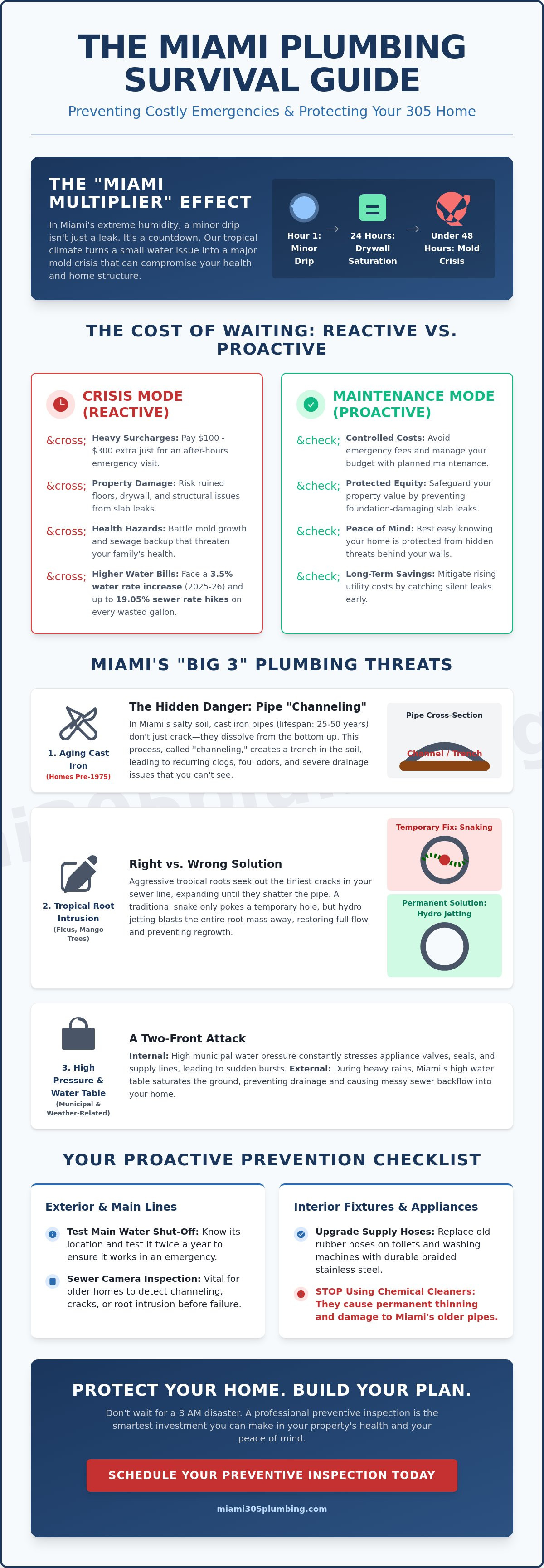
A plumbing emergency is any sudden failure that risks your property's structure or your family's health. It is the burst pipe under the sink or the sewage backup in the guest shower. In the 305, we face a specific challenge called the "Miami Multiplier." Our extreme humidity turns a tiny pinhole leak into a full-blown mold crisis in less than 48 hours. Preventing plumbing emergencies isn't just about avoiding a wet floor. It's about stopping a health hazard before it takes root in your drywall and spreads through your HVAC system.
By mid-2026, the cost of being reactive has climbed significantly. The Miami-Dade Water and Sewer Department adopted a 3.5% rate increase for the 2025-2026 fiscal year. This means every gallon wasted by a silent leak hits your wallet harder than ever before. Wholesale sewer rates have also jumped by 19.05% for certain areas like Miami Beach. Moving from "crisis mode" to "maintenance mode" is the only way to protect your budget. Gaining a basic level of understanding your home's plumbing system helps you spot these issues early. It allows you to act as a reliable responder for your own property.
The Cost of Waiting for a Crisis
Routine inspections are an essential investment. Emergency calls in Miami typically carry a heavy surcharge, often between $100 and $300 just for the after-hours visit. If you live in high-value neighborhoods like Pinecrest, a slab leak is especially dangerous. These hidden leaks can silently erode the soil under your foundation. This leads to structural cracks that tank your property value in a competitive market. Proactive care keeps your home's equity safe and your stress levels low.
When to Shift from DIY to Professional Help
You need to know when to put down the wrench. A slow drain might seem like a simple fix, but it often signals a systemic failure deep in your sewer lines. Stop using chemical drain cleaners immediately. These harsh liquids are far too aggressive for the older pipes found in many Miami homes and can cause permanent pipe thinning. When a drip becomes a steady flow, you need a real person on the line who knows the local 305 infrastructure. Our skilled professionals use specialized leak detection technology to find problems behind walls that DIY methods simply cannot reach.
Identifying the 'Big 3' Miami Plumbing Threats
Miami homeowners face a set of challenges that plumbers in other parts of the country never see. While others worry about snow, we deal with aggressive salt, invasive tropical roots, and a water table that sits just feet below our foundations. Understanding these local threats is the first step in preventing plumbing emergencies before they ruin your afternoon. You need to be vigilant about what is happening beneath your floorboards and under your lawn. If you ignore these three specific risks, you are essentially waiting for a disaster to happen.
The Hidden Danger of Cast Iron Pipes
Homes built before 1975 are often sitting on a ticking time bomb. These properties typically use cast iron for their main sewer lines. In the 305, our soil has a high salt content that accelerates a process called "channeling." This occurs when the bottom of the pipe corrodes away completely, leaving a trench in the dirt where the pipe used to be. You won't see a puddle, but you will notice slow drains, foul odors, and clogs that keep coming back no matter how many times you clear them. In Florida's aggressive salty soil, the typical life expectancy for cast iron plumbing is often between 25 and 50 years.
Root Intrusion in Tropical Climates
Our lush Miami landscape is beautiful, but it is a nightmare for your sewer system. Tropical trees like Ficus and Mango have massive, moisture-seeking root systems that act like heat-seeking missiles. They find tiny gaps in your pipe joints and expand until the pipe shatters from the inside out. Traditional snaking is usually a temporary fix because it only pokes a hole through the blockage. To truly protect your home, you need hydro jetting services to blast away the root mass and restore the pipe's full diameter. This professional approach ensures the roots don't grow back even stronger next month.
High water pressure from our municipal supply is another silent killer for your fixtures. While strong pressure feels great in the shower, it puts constant stress on your water heater valves and faucet seals. When you combine this with Miami's high water table, your drainage system has very little room for error. During heavy tropical downpours, a saturated ground prevents proper drainage and can lead to sewer backflow. Even though we don't deal with ice, protecting your plumbing from environmental threats is still a vital part of your home's hurricane and storm season preparation. Staying ahead of these three threats is the only way to keep your home dry and your repair bills low.
The Essential Exterior and Sewer Line Checklist
Miami's unique geography means your plumbing doesn't end at your foundation. With a water table that often sits just a few feet below the surface, your exterior drainage system is constantly under pressure. Preventing plumbing emergencies starts in your yard. If you don't manage your exterior lines, a heavy afternoon downpour can quickly turn into a sewer backup inside your home. You need to be the first responder for your property's exterior health.
First, you must locate and test your main water shut-off valve every six months. This is your first line of defense. If a pipe bursts, you can't afford to hunt for a buried valve in the dark. Turn it fully off and back on to ensure it hasn't seized up from mineral buildup. While you are outside, inspect your hose bibs. A slow drip might seem minor, but it often indicates internal valve wear that could lead to a sudden failure under high municipal pressure. Don't let a small leak become a big problem.
Scheduling a sewer camera inspection is another vital step for every 305 homeowner. As we discussed earlier, cast iron pipes and tropical roots are major threats in our local soil. A camera allows a real person to see exactly what is happening inside your lines without digging up your expensive landscaping. It is the only way to catch a hairline crack before it becomes a total collapse.
Main Line and Sewer Maintenance
Keep a close eye on your lawn for any unusual changes. If you see "sinkholes" or patches of grass that are suddenly much greener than the rest, you likely have a sewer leak. These leaks attract invasive roots and cause soil erosion that can destabilize your driveway or patio. If your home is in a low-lying area, you need to verify the function of your backflow preventers. These devices stop city sewage from being pushed back into your home during high-tide events or heavy floods. For both residential and commercial properties, professional hydro jetting is the best way to keep these lines clear of grease and debris year-round.
Storm Season Preparation
Hurricane season brings extreme weather that tests every part of your system. You must clear debris from your area drains and gutters before the first storm hits. Clogged yard drains cause water to pool against your foundation, leading to seepage and structural damage. If you have a sump pump, ensure it has a functional battery backup. Power outages are common during Miami storms, and a pump without power is useless. Finally, inspect the seal where the main water line enters your home. A cracked seal allows moisture to bypass your walls and cause hidden rot. Being proactive about preventing plumbing emergencies now saves you from a 3 AM crisis later.
Interior Plumbing Maintenance: Fixtures and Appliances
Most indoor floods start with a single failed hose or a forgotten valve. While managing your exterior lines is crucial for storm safety, your interior fixtures require a different kind of vigilance. Preventing plumbing emergencies inside the home means looking at the small components that work under constant pressure. If a washing machine hose or a toilet supply line snaps while you are at work, the resulting damage can cost thousands in flooring and drywall repairs. You need to be proactive to keep your 305 home dry and secure.
Start with your laundry room. Replace standard rubber washing machine hoses with braided stainless steel versions every five years. Rubber degrades over time and can bubble or burst without warning. Next, move to your bathrooms and kitchen to test the "angle stop" shut-off valves. These are the small knobs located under your sinks and behind your toilets. In Miami, mineral buildup from our water can cause these valves to "freeze" or become stuck. If a pipe bursts, you must be able to turn these handles easily to stop the flow. While you are under the kitchen sink, check your garbage disposal for any signs of slow leaks or unusual grinding noises that suggest a failing motor.
Water Heater and Appliance Care
Your water heater is one of the hardest working appliances in your home. You should flush the tank annually to remove the grit and lime that settles at the bottom. Hard water minerals settle at the bottom of the tank, creating an insulating layer that causes the burner to overheat and eventually crack the tank's lining. You should also have a skilled professional inspect the anode rod. This sacrificial rod is designed to corrode so your tank doesn't, and replacing it can double the life of your unit. Don't forget to check your refrigerator water lines as well. These thin plastic tubes often become brittle or kinked, leading to hidden leaks behind your cabinetry. If you notice a drop in hot water pressure or strange popping sounds, it is time to call a real person for water heater repair or replacement before the tank fails completely.
Fixture and Leak Detection
Silent leaks are the primary cause of the high water bills many Miami residents are seeing after recent rate increases. You can find these by monitoring your water meter during a period when no one is using water. If the dial is moving, you have a leak somewhere in your system. Intermittently running toilets are a common culprit and usually just need a new flapper or fill valve. You should also clean your faucet aerators every few months. This maintains proper flow and prevents the internal pressure buildup that can damage older faucet seals. By staying on top of these small tasks, you are effectively preventing plumbing emergencies and ensuring your home remains a stress-free environment.
Building Your Preventive Maintenance Plan with Miami 305 Plumbing
Are you ready to stop worrying about your pipes? While the DIY checklist is a great start, preventing plumbing emergencies often requires a professional eye and specialized equipment. We see the things that hidden sensors and visual checks might miss. Our team knows the 305 area inside and out, from the historic homes of Coral Gables to the modern builds in Kendall. We are your local hero when it comes to keeping your home dry and your repair costs low. You deserve a system that works as hard as you do.
The 8th Edition of the Florida Building Code is currently in effect, and we are already preparing for the 9th Edition expected by December 31, 2026. These regulations emphasize the durability needed for our High-Velocity Hurricane Zone. We ensure your home meets these rigorous standards during every visit. Our goal is to move you from a state of constant worry to a state of total confidence. We act as a steady, experienced partner for your property's long-term health.
The Value of a Professional Inspection
A licensed plumber identifies the early signs of disaster that a homeowner might overlook. We look for microscopic corrosion spots on your supply lines and test the torque on valves that haven't been turned in years. We create a custom maintenance schedule based on your home's specific age and pipe materials. If you have older cast iron, we use advanced Leak Detection Services to find thinning walls before they collapse. This technology lets us see behind your drywall and under your concrete slab without causing a mess. It is the most effective way to catch a silent leak before it ruins your foundation and leads to expensive structural repairs.
Ready for Anything: Our 24/7 Promise
Sometimes, despite your best efforts, a crisis still happens. That is why we are on call every hour of the night. When you call us, a real person answers the phone. You won't get stuck in an automated menu or talk to a robot. We understand the urgency of a flood in the middle of a tropical storm. Our experts are skilled in complex tasks like tunneling and sewer line repair. Tunneling is especially vital in Miami because it allows us to fix pipes under your slab without breaking your indoor floors. This saves you time and protects your home's interior value. Don't wait for the next heavy rain to test your system. Contact Miami 305 Plumbing for a system check-up today! and get the peace of mind you deserve. We are your dependable neighbor, ready to respond near you at any time.
Secure Your Home Against the Next 305 Storm
You now have the tools to protect your property from the ground up. From monitoring aging cast iron pipes to maintaining your interior fixtures, every small step makes a massive difference. Preventing plumbing emergencies is about staying one step ahead of the Miami humidity and our unique environmental challenges. You don't have to wait for a 3 AM flood to take control of your home's safety and value.
We bring over 20 years of local Miami experience to every service call. Our team specializes in non-invasive leak detection to find hidden issues behind your walls without causing a mess. If a crisis does hit, our 24/7 emergency response ensures a real person is always ready to answer your call. Don't leave your home's health to chance when the next tropical downpour arrives. Schedule your preventive plumbing maintenance with a real Miami expert! today. Take action now and enjoy the peace of mind you deserve. We are proud to be your reliable responder in the 305.
Frequently Asked Questions
How often should I have my plumbing inspected in Miami?
You should schedule a professional plumbing inspection at least once every year to account for Miami's harsh environmental factors. If you own an older property built before 1975, a bi-annual check-up is much safer. These regular visits are the most effective way of preventing plumbing emergencies by catching small corrosion spots before they turn into major floods. Our team evaluates your entire system to ensure your home meets the current Florida Building Code.
What are the first signs of a plumbing emergency?
The first signs include a sudden loss of water pressure, persistent gurgling sounds from your drains, or a foul sewage odor inside your home. You might also notice wet spots on your floor or a water bill that jumps unexpectedly. Don't ignore these red flags. In our humid climate, a small leak can trigger a massive mold crisis in less than 48 hours. Call a real person immediately to investigate the source of the problem.
Why do cast iron pipes fail so often in South Florida?
Cast iron pipes fail in South Florida because our soil has a high salt content and a very high water table. This creates a corrosive environment that eats away at the bottom of the metal through a process called channeling. While these pipes were standard decades ago, they are now ticking time bombs for many 305 homeowners. We often recommend a camera inspection to see if your lines are still structurally sound or require replacement.
Can tree roots really cause a plumbing emergency?
Tropical tree roots are a primary cause of sewer line collapses in neighborhoods like Coral Gables and Pinecrest. Invasive species like Ficus and Mango trees have aggressive root systems that seek out the moisture inside your pipe joints. Once they enter, they expand until the pipe shatters. Traditional snaking only provides a temporary fix. You need professional hydro jetting to clear the roots and restore your drain's full capacity before the line fails completely.
How do I find my main water shut-off valve?
Your main water shut-off valve is typically located near the front of your property by the water meter or where the main supply line enters your house. It is often housed in a plastic or concrete box in the ground. You must be able to reach this valve quickly in a crisis. We suggest testing the handle every six months to ensure it hasn't seized up from mineral buildup or rust. Knowing this location is vital for home safety.
What should I do if I suspect a slab leak under my house?
If you suspect a slab leak, turn off every faucet and appliance in your home and check your water meter. If the dial is still spinning, you have a leak that requires immediate professional attention. Do not attempt to break your own concrete. We use non-invasive leak detection technology to pinpoint the exact location of the break. This allows us to use tunneling services to fix the pipe without destroying your expensive interior flooring.
Is hydro jetting safe for older plumbing systems?
Hydro jetting is safe for older systems as long as a professional performs a sewer camera inspection first. This visual check ensures the pipes aren't already collapsed or too thin to handle the high-pressure water. When done correctly, it is the most effective way of preventing plumbing emergencies caused by heavy grease buildup or root intrusion. It cleans the pipe walls much more thoroughly than a standard drain snake and restores proper flow.
How does high water pressure damage my home's plumbing?
High water pressure acts like a constant hammer hitting your valves, seals, and appliance hoses. While it feels great in the shower, pressure exceeding 80 PSI can cause your water heater to fail or your washing machine hoses to burst. We recommend installing a pressure-reducing valve if your municipal supply is too strong. This simple upgrade protects your entire plumbing system from premature wear and sudden, expensive failures that could flood your home.


0 Comments