

Cast Iron Pipe Problems in Florida: Myths, Realities, and Modern Solutions
What if the most expensive part of your plumbing repair isn't the pipe itself, but the thousands of dollars in designer tile you'll have to smash to reach it? If you live in a home built before 1975, you're likely sitting on a ticking time bomb. Dealing with cast iron pipe problems florida homeowners face is often a source of deep anxiety, especially when different plumbers give you conflicting advice about your options. You want a solution that fixes the leak without turning your kitchen or bathroom into a construction zone.
We understand the stress of a potential pipe failure. It's frustrating to think that the very ground your house sits on is working against you. In this article, you'll learn exactly why Florida’s unique soil chemistry and high water table shorten the lifespan of cast iron to just 30 or 50 years. We'll also show you how modern, non-destructive methods can save your home without tearing up your beautiful floors.
We're going to dive into the 2026 Florida Plumbing Code updates and explain the difference between traditional excavation and modern solutions like tunneling and lining. You'll get the clarity you need to make the best decision for your property and your peace of mind.
Key Takeaways
- Understand why Florida's acidic soil and high water table cause cast iron to fail decades earlier than in other states.
- Separate fact from fiction by identifying the real warning signs of cast iron pipe problems florida residents often ignore.
- Explore modern tunneling and sewer line replacement methods that protect your interior tile and hardwood floors from destruction.
- Learn the critical steps for documenting pipe damage to better prepare for discussions with your insurance carrier.
- Gain clarity on how the 2026 Florida Plumbing Code updates impact your options for pipe repair and replacement.
The Myth of the 100-Year Pipe: Why Florida Homes are at Risk
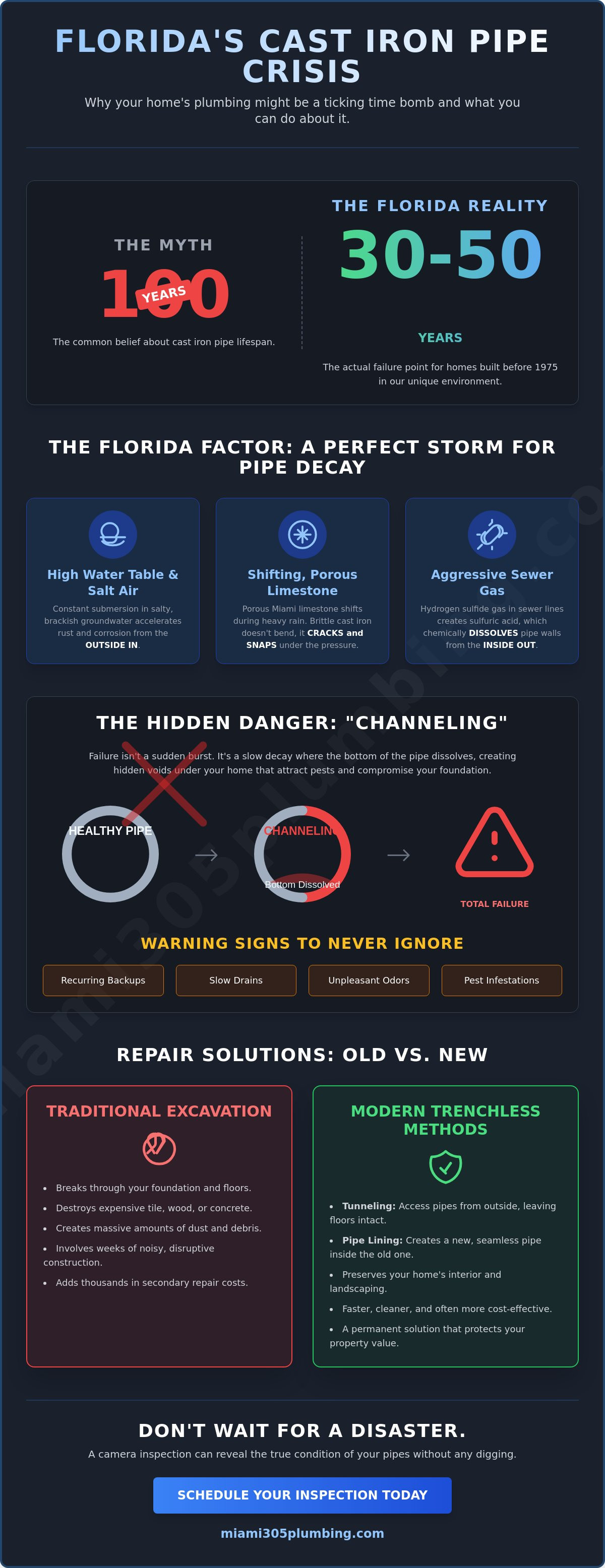
Many homeowners believe their plumbing is invincible. They see heavy metal pipes and assume they'll last a century. In reality, cast iron pipe problems florida residents experience often peak much sooner. While the history of cast iron pipes shows they were once the gold standard for durability, that strength has a shelf life. In Florida's unique environment, the "100-year lifespan" is a dangerous myth. Most pipes in our region actually begin to fail between 30 and 50 years. If your home was built during the mid-century boom, you are likely already living on borrowed time.
The "Golden Era" of Cast Iron in South Florida
During the post-war housing boom from the 1950s through the early 1970s, builders across Miami, Coral Gables, and Coconut Grove relied almost exclusively on cast iron. It was sturdy and quiet. It felt permanent. However, by the mid-1970s, the industry shifted toward PVC for a reason. If your home was built in this window, you are in the primary risk zone. You can identify your pipe material easily. Look at the main vent stack on your roof or check for dark, metallic pipes in your utility closet or crawlspace. If it's black and looks like heavy metal, it's cast iron, and it's likely original to the house.
This era of construction relied on what we now recognize as a form of planned obsolescence. These materials were designed for the needs of 1960. They weren't built to handle the high-volume water usage or the aggressive cleaning chemicals of a modern household. The mismatch between mid-century materials and modern life is a recipe for a plumbing crisis.
Myth vs. Reality: Does Cast Iron Really Last a Lifetime?
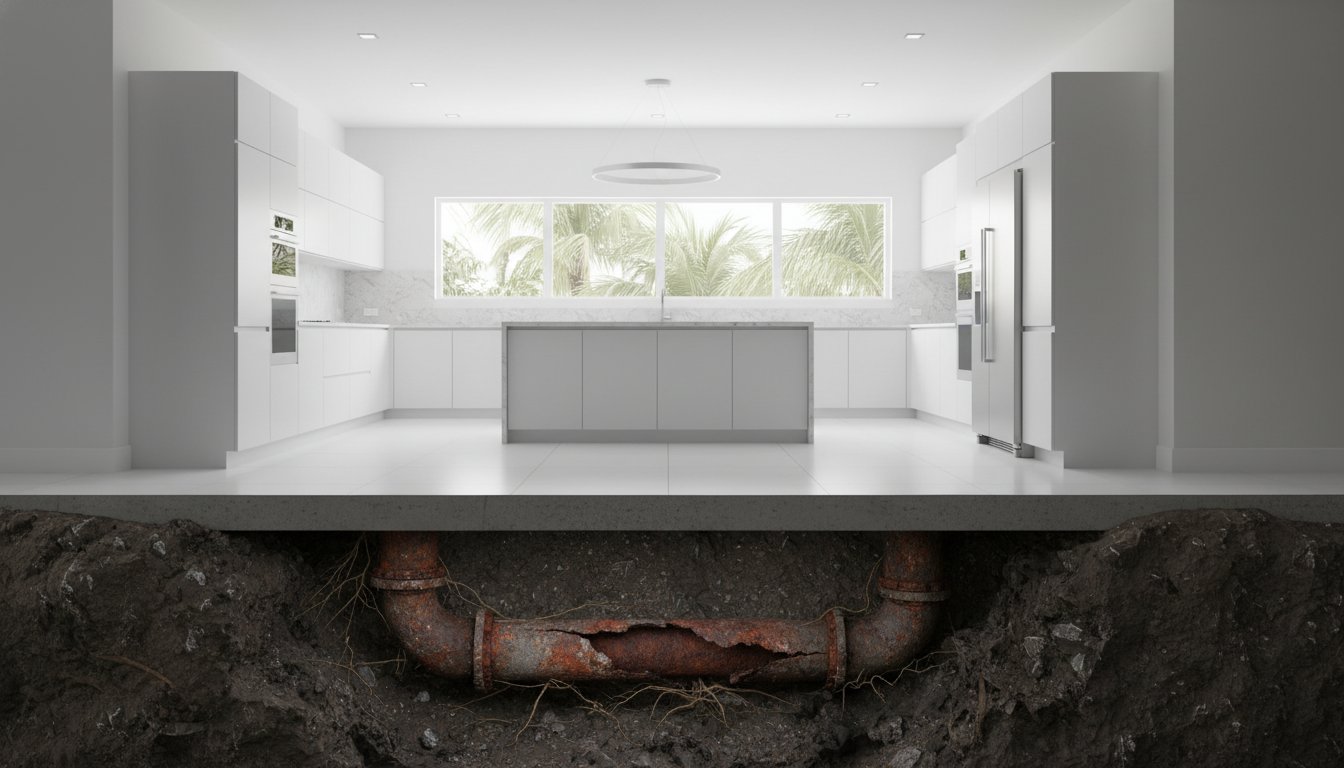
"If it isn’t leaking, it isn’t failing." This is the most expensive mistake a homeowner can make. Cast iron doesn't always fail with a sudden, visible burst. Instead, it suffers from a process called "channeling." This happens when water and debris wear a deep groove into the bottom of the pipe over decades. Eventually, the bottom of the pipe literally dissolves away into the soil beneath your home. This creates a hidden void under your concrete slab. These gaps attract pests and can even lead to structural settling.
Modern household chemicals and heavy-duty drain cleaners only speed up this decay. They eat through the oxidized metal, turning a small thin spot into a total collapse. If you're dealing with recurring backups or slow drains, don't ignore them. It is time to look into cast iron pipe replacement in Miami before the damage spreads to your expensive tile or hardwood floors. Waiting for a visible leak usually means the damage is already severe and costly.
The Florida Factor: Why Our Local Environment Accelerates Pipe Decay
Florida isn't just tough on your roof and AC; it’s a graveyard for metal plumbing. The unique geological makeup of our state creates a perfect storm for cast iron pipe problems florida families often discover too late. While other states have dry, stable soil, South Florida has a high water table. This keeps your sewer lines submerged in brackish groundwater for months at a time. This constant soak accelerates oxidation. Even underground, the salt air from our coastlines penetrates the soil. It feeds the rust that eats your pipes from the outside in.
In some regions, "Sulphur Water" adds another layer of destruction. This water contains hydrogen sulfide gas. When it reacts with the iron, it creates sulfuric acid. This acid is incredibly aggressive. It doesn't just rust the metal; it dissolves the pipe wall until it's as thin as paper. By the time you notice a smell or a slow drain, the pipe's structural integrity is often gone.
Corrosive Soil and the Miami Limestone Problem
The ground in Miami isn't just dirt. It's porous limestone. This rock is prone to shifting, especially during our heavy rainy seasons. Because cast iron is extremely brittle, it doesn't bend when the ground moves. It snaps. We see this frequently in areas like Kendall and Palmetto Bay. In these neighborhoods, soil settlement leads to jagged breaks in the main line that can't be fixed with a simple patch.
Chemically, the alkaline nature of Florida’s limestone reacts with the iron. This creates a battery-like effect called galvanic corrosion. Over time, the metal loses its strength and becomes flaky. If you're worried about the state of your underground lines, speak with a local specialist to get a clear picture of your home's risk level.
Humidity and the Internal Rust Cycle
Our year-round warmth and high average humidity create a breeding ground for internal decay. Because the air is so moist, your pipes never truly dry out between uses. This leads to a process called "tuberculation." These are small, jagged rust bubbles that grow inside the pipe. They look like barnacles on a ship's hull.
Tuberculation does more than just weaken the metal. It catches toilet paper, grease, and hair. This creates stubborn clogs that most homeowners try to fix with harsh chemicals. According to Florida's building codes, modern replacement standards prioritize materials that resist this specific type of build-up. If you have original cast iron, those rust bubbles are likely already narrowing your sewer line’s diameter. This is the root cause of the recurring backups you’re experiencing today.
Detecting Failure: Myth-Busting Common Plumbing Symptoms
Why do so many homeowners wait until a total backup to call a plumber? Usually, it's because they misdiagnose the early signs of cast iron pipe problems florida as simple maintenance issues. You might think a slow-moving sink just needs a stronger chemical cleaner. This is a dangerous mistake. Most store-bought cleaners are highly acidic. They sit in the "channel" at the bottom of your pipe and eat away at the remaining metal. If your water is moving slowly, it's rarely just a hair clog. It's often because the internal rust bubbles we discussed earlier are trapping debris and narrowing the path.
What about that persistent "rotten egg" smell in your laundry room or bathroom? Many people assume it's just a dry P-trap. While that's a possibility, a constant sewage odor is a major red flag for a cracked sewer line. When the iron walls fail underground, sewer gases escape and rise through your floorboards. This isn't just a nuisance; it's a documented health risk. The scale of these failures across the state is significant, as shown in this Florida Office of Insurance Regulation report which tracks water-related damage claims.
Have you noticed a sudden influx of roaches or rodents despite regular pest control? It sounds like a job for an exterminator, but it's often a plumbing crisis. Pests use the cracks and gaps in failing cast iron as a direct highway into your home. If your pipes have "channeled" out, you've essentially opened a door under your slab. No amount of bug spray will fix a problem caused by a broken sewer line.
Why a Sewer Camera Inspection is the Only Source of Truth
Stop guessing and start seeing. Professional sewer camera inspections are the only way to distinguish between a simple blockage and a structural collapse. A high-definition camera travels through the line to reveal hidden cracks, root intrusions, and the exact state of the pipe's floor. Visual proof is a non-negotiable requirement for documenting your loss if you intend to file a Florida homeowners insurance claim. Without this footage, you're just guessing at the health of your home's foundation.
Warning Signs You Shouldn’t Ignore
Your property often gives you clues before the situation becomes a 24/7 emergency. Keep a vigilant eye out for these specific red flags:
- Unexplained "green patches" in your Miami lawn during the dry season where the grass is suddenly lush and vibrant.
- Indentations or sinking pavers in your driveway or walkway near the sewer lateral.
- Gurgling sounds coming from your toilets when the shower is running or the dishwasher is draining.
These signs indicate that sewage is escaping the pipe and eroding the soil beneath your home. Don't wait for the floor to sink. Address these cast iron pipe problems florida before they turn into a five-figure restoration project.
Repair vs. Replacement: Modern Solutions for Florida Homeowners
In the past, fixing a sewer line under your house meant one thing: a jackhammer. Plumbers would spend days smashing through your living room or kitchen to reach the problem. This "open-cut" method is loud, messy, and destroys your home's value. Today, the cast iron pipe problems florida homeowners deal with are handled with much more precision. Modern surgical approaches prioritize your home's interior. We focus on ensuring your expensive renovations stay intact while the plumbing is fully restored. Since 2020, cast iron pipe replacement has evolved significantly, moving away from destructive excavation toward smarter, non-invasive technology.
Before any repair begins, hydro jetting is used to clear the line of scale and rust. This high-pressure cleaning is essential to see the true condition of the pipe floor. If you choose the "cheapest" fix, like a temporary patch, you are often just delaying the inevitable. A patch on a pipe that is already "channeling" will fail within months. This usually leads to a frantic 24/7 emergency plumber Miami call when the system finally collapses and floods your home. Investing in a modern, long-term solution now prevents a catastrophic failure later.
Tunneling: Saving Your Miami Home’s Interior Floors
Plumbing tunneling is the gold standard for South Florida slab homes. Instead of coming through your front door with a sledgehammer, we dig a strategic access point outside your foundation. Our teams then excavate a path directly under the house. This allows for a full pipe replacement without a single speck of dust entering your living space. While the labor for digging a tunnel is significant, it is often far more cost-effective than replacing custom hardwood or high-end tile floors throughout your entire property. It's the only way to address cast iron pipe problems florida without turning your home into a construction zone.
Trenchless Pipelining: When is it the Right Call?
Trenchless pipelining, or CIPP, uses an epoxy-saturated sleeve to create a "pipe within a pipe." Once the epoxy cures, it forms a seamless, root-proof barrier that resists the corrosive Florida groundwater. This method is incredibly fast and effective, but it has one major limitation. If your pipe has already suffered a structural collapse or is completely "pancaked," there is no room for the liner. In those cases, physical replacement via tunneling is the only reliable option. In our humid climate, a properly installed epoxy liner can provide decades of worry-free service, often outlasting the original metal.
If you're unsure which method fits your home's specific needs, get a professional assessment from a team that specializes in non-destructive repairs.
Navigating the Crisis: Next Steps for Miami Property Owners
Dealing with a total sewage backup? Stop what you are doing. Turn off your main water supply immediately. This prevents more waste from flooding your home. Call a professional. These cast iron pipe problems florida homeowners face require a fast, expert response. Waiting even a few hours can lead to mold growth and permanent structural damage to your subfloor. We prioritize these emergencies to give you peace of mind during a high-stress situation.
Beyond the immediate crisis, look at the long-term value of your property. In the competitive Miami real estate market, original cast iron is now seen as a liability. Savvy buyers and home inspectors look for updated PVC or lined systems. Proactively replacing your failing lines doesn't just stop leaks. It protects your equity. It ensures a smoother sale when you eventually decide to list your home. A home with a certified, modern sewer system is a much easier sell in South Florida.
Insurance Claims and Cast Iron Pipes in Florida
Documenting your loss is the most critical step for a successful claim. Insurance carriers in 2026 are increasingly strict. They often distinguish between "sudden pipe failure" and "gradual wear and tear." Most policies cover the damage to your floors and walls, but they might not cover the pipe itself. A professional leak detection report is your best defense. It provides the objective data needed to prove the scope of the damage. Without clear documentation, you risk a denied claim for what the industry calls "gradual deterioration."
Choosing a Local Miami Expert for Your Sewer Project
Don't hire just any contractor. Miami-Dade building codes are specific. For example, the 2026 updates now mandate 4-inch main sewer lines in high-water-table areas. You need an expert who knows these local requirements inside and out. Ask potential plumbers if they specialize in tunneling. Many will try to push you toward breaking your floors because they lack the equipment for underground excavation. Demand a provider who offers 24/7 post-repair support. You need to know a real person is on call if a question arises after the job is done.
Ready to get a clear diagnosis of your pipe health? Schedule your sewer camera inspection with Miami 305 Plumbing today! We provide the human connection and technical expertise you need to resolve your cast iron pipe problems florida for good. Our team is deeply rooted in this community and ready to help you protect your home.
Secure Your Home’s Foundation and Peace of Mind
You now understand how Florida’s unique geology and high water table turn original plumbing into a ticking time bomb. Waiting for a visible leak or a total sewage backup isn't just risky; it's a gamble with your home's value. Modern tunneling and trenchless technologies allow you to restore your system without destroying your expensive interior renovations. By taking action now, you avoid the stress of "gradual wear and tear" insurance denials and ensure your property remains a solid investment.
Don't let the hidden cast iron pipe problems florida homeowners face turn into a five-figure restoration project. We bring 20+ years of local South Florida expertise to every inspection. Our team specializes in non-destructive tunneling and provides a 24/7 emergency response for critical sewer failures. We value human connection and are ready to answer your call at any hour of the day or night.
Take the first step toward a permanent solution today. Contact Miami 305 Plumbing for a 24/7 Pipe Evaluation and get a clear, visual diagnosis of your sewer lines. We are here to help you protect your home with reliable, local service you can trust.
Frequently Asked Questions
How do I know if my Florida home has cast iron pipes?
Check your home's original construction date. If your house was built before 1975, it almost certainly has cast iron sewer lines. You can also look at the main vent stack on your roof or the pipes in your crawlspace. If they are black, heavy, and metallic, they are original cast iron. A professional camera inspection is the only way to confirm the material and its current health.
Will my Florida homeowners insurance cover cast iron pipe replacement?
Most standard policies don't cover the cost of the pipes if the failure is due to gradual wear and tear. However, they usually cover the "resulting damage," which includes the cost to repair your floors, walls, and cabinets. Some newer policies in 2026 include specific "cast iron endorsements." You should review your policy's water damage limits with a professional to understand your coverage.
Can I just snake my cast iron pipes if they are clogging?
Snaking is a temporary fix that can be dangerous for older metal. If your pipes have "channeled" or thinned out at the bottom, a heavy-duty snake can punch a hole through the brittle iron. This turns a simple clog into a structural collapse under your slab. Always get a visual inspection before using mechanical drain cleaning tools on antique plumbing.
What is the average cost to replace cast iron pipes in a Miami home?
The total investment depends on the length of the line, the depth of the burial, and the replacement method you choose. Traditional excavation is often more expensive because you must factor in the price of replacing your interior tile or hardwood floors. Tunneling avoids these interior costs. We provide a detailed diagnosis of cast iron pipe problems florida residents face to give you an accurate scope of work.
How long does the tunneling method take compared to traditional replacement?
Tunneling typically takes a few days longer for the initial excavation compared to breaking through a slab. However, it saves you weeks of interior reconstruction. You won't have to move out of your home or hire contractors to replace your flooring. It is the most efficient way to restore your plumbing while keeping your daily life and home interior exactly as they are.
Is hydro jetting safe for old, brittle cast iron pipes?
Hydro jetting is safe if a camera inspection confirms the pipe still has structural integrity. High-pressure water is the best way to clear out the "tuberculation" and rust bubbles that trap debris. If the pipe wall is already paper-thin, we will recommend a different approach. It is a critical step for preparing a sewer line for a modern epoxy liner.
Can tree roots grow through cast iron pipes in South Florida?
Yes, tree roots are a major threat to plumbing in our region. Ficus and palm roots are incredibly aggressive and can find tiny cracks caused by limestone shifting or corrosion. Once a root enters the pipe, it expands and eventually shatters the brittle metal. This leads to massive blockages that require professional hydro jetting or physical pipe replacement to resolve.
What happens if I ignore my failing cast iron pipes?
Ignoring the problem leads to a total sewage backup into your home's lowest drains. Beyond the mess, escaping sewage creates hollow voids in the soil beneath your foundation. This can cause your concrete slab to crack or sink over time. Addressing cast iron pipe problems florida early prevents these massive structural repairs and protects your family from the health risks of sewer gas leaks.


0 Comments